
GENEAGLE · Brewery Construction Notes | Policy update
On 20 November 2026, China's Ministry of Ecology and Environment released its 2027 catalogue for classifying environmental impact assessments (EIAs) for construction projects. It takes effect on 1 January 2027. The production threshold for a full EIA report increases from 1,000 to 5,000 kilolitres per year for the specified alcoholic beverage projects that use fermentation.
Under item 25 of the 2021 catalogue, projects using fermentation with an annual production capacity of at least 1,000 kilolitres require a full EIA report. Under item 25 of the 2027 catalogue, that threshold rises to 5,000 kilolitres for fermented production of baijiu, beer, huangjiu, wine and other alcoholic beverages. Alcohol manufacturing is separately listed as requiring a full report.
A fermented beverage project with an annual capacity of at least 1,000 but less than 5,000 kilolitres may move from a full EIA report to an EIA report form under item 25. Rice wine projects should be classified according to their actual product and production process.
Fermented beverage projects below 5,000 kilolitres per year still require an EIA under item 25. Where a project spans multiple categories or general processes in the catalogue, the highest applicable assessment category governs.
Check local land-use planning, industrial park admission requirements, ecological zoning controls, utilities and the capacity of wastewater treatment facilities to receive the plant's discharge. Assess water, steam, refrigeration and drainage needs against the proposed fermentation, cooking, mashing, filtration and cleaning processes.
Investors considering smaller craft breweries or regional rice wine and huangjiu projects should weigh initial investment, process compatibility and production flexibility alongside room for future expansion. Product positioning, distribution and operating costs remain central to the investment case.
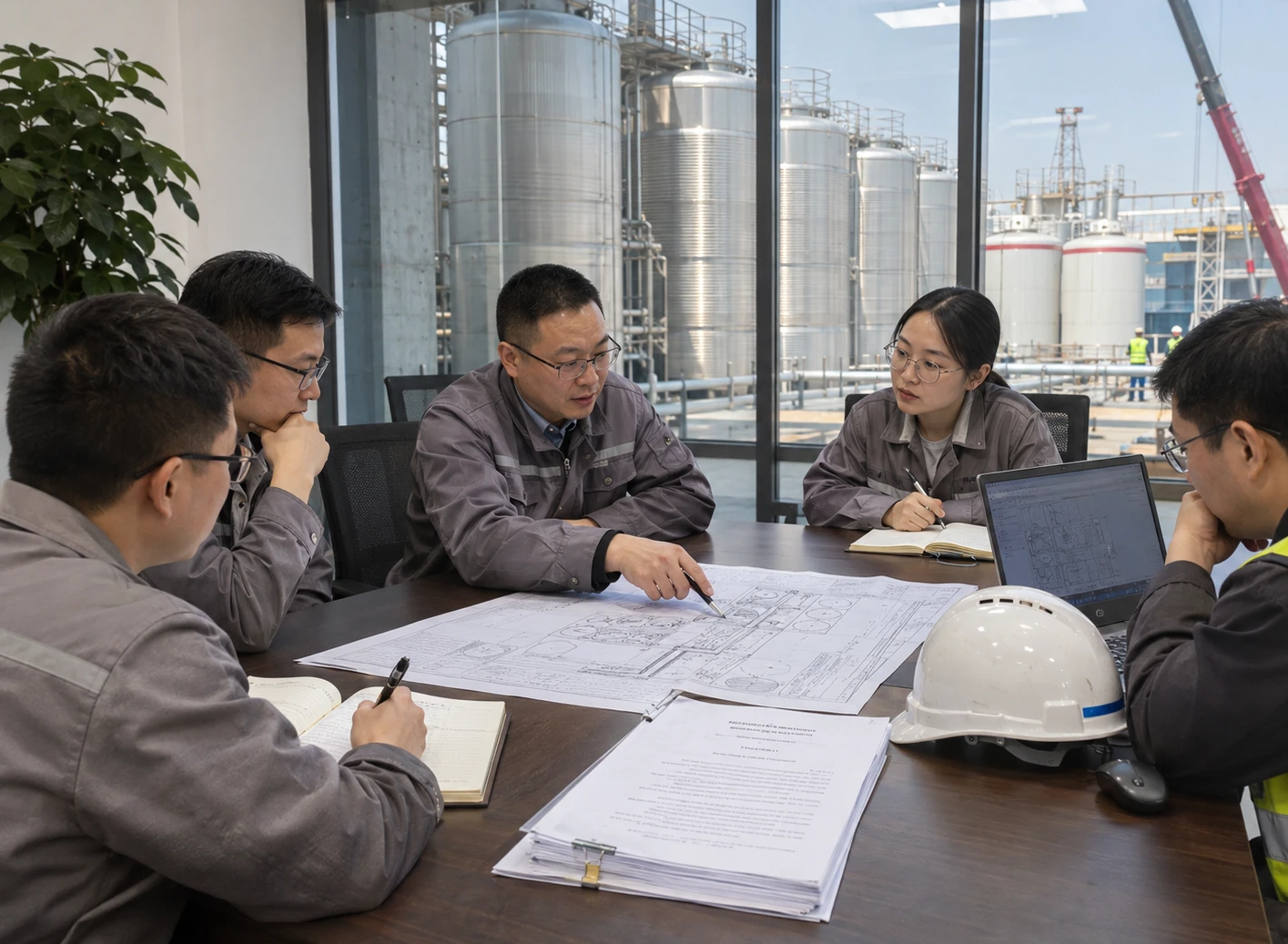
Shandong Jingying Engineering Equipment Co., Ltd. follows policy developments affecting alcoholic beverage and liquid food projects and provides process design, equipment manufacturing and engineering implementation services.
For early-stage project planning. The applicable requirements depend on the project scope, the rules in force at the time and the local authorities' determination. 2027 catalogue · 2021 catalogue